Starting seeds indoors gives gardeners control over growing conditions, but without the right light schedule, seedlings can become weak and leggy. Natural sunlight during winter and early spring isn't strong enough or long enough to support healthy seedling growth. This is where grow lights become essential for success.
Most seedlings need 14 to 16 hours of light each day to develop strong stems and healthy leaves. This extended light period signals the plant to focus on vegetative growth while mimicking the long days of late spring. The remaining 8 to 10 hours of darkness are just as important because plants use this time for respiration and nutrient transport throughout their structure.
Setting up the right light schedule from the start prevents common problems like stretched stems and pale leaves. Using a timer to automate the light cycle ensures consistency, which helps seedlings develop properly before transplanting outdoors.
Key Takeaways
- Seedlings require 14 to 16 hours of light daily for optimal growth and development
- The dark period of 8 to 10 hours is essential for plant respiration and nutrient transport
- Using an automatic timer maintains consistent light schedules and prevents weak, stretched seedlings
Why Seedlings Need a Dedicated Grow Light Schedule
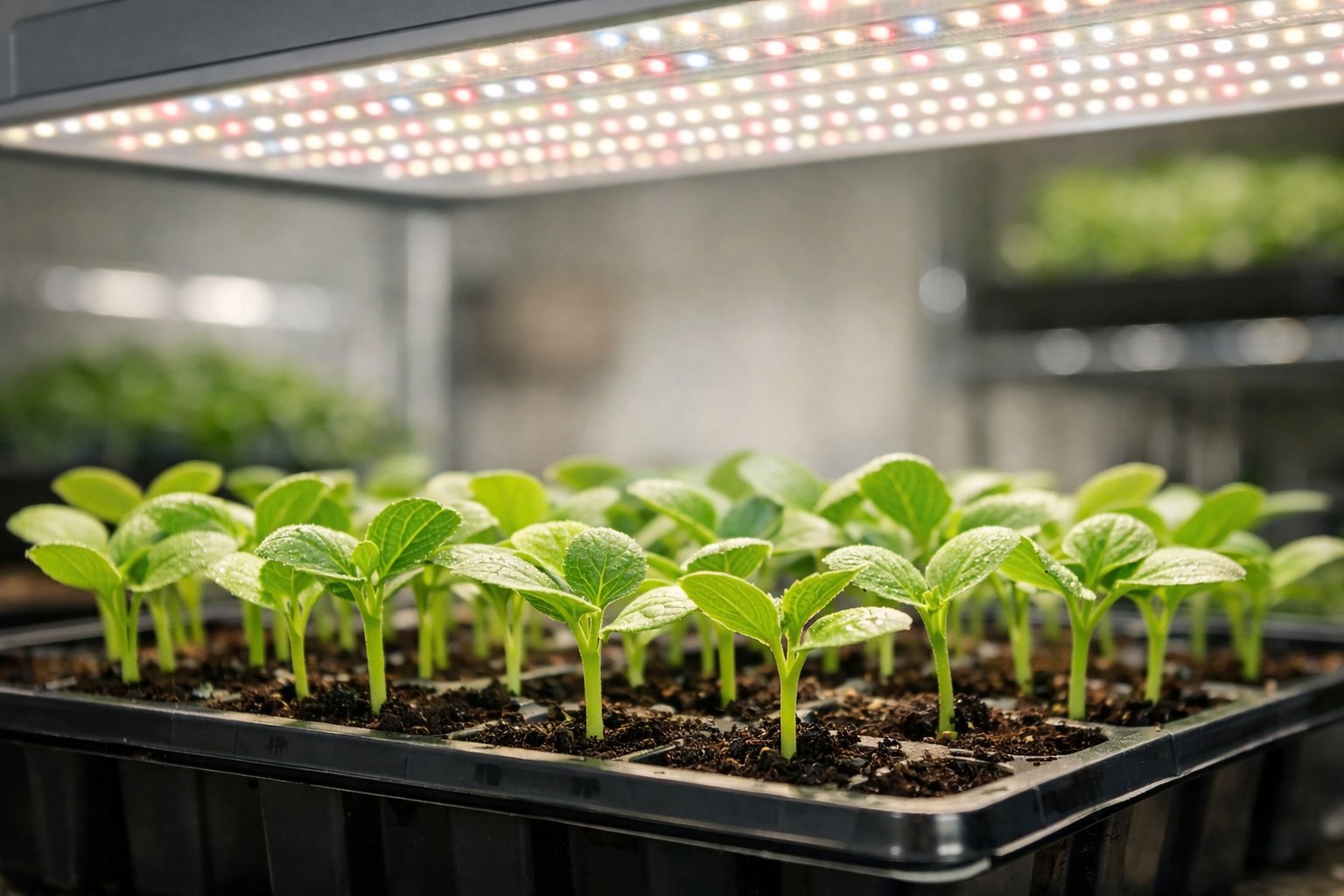
Seedlings require specific light conditions at different stages of development to grow strong and healthy. Without a proper schedule, young plants struggle with weak stems, poor root development, and stunted growth that affects their entire life cycle.
Impact of Light on Seedling Development
Light drives photosynthesis, the process seedlings use to convert energy into growth. During the first weeks after germination, young plants need 14-16 hours of consistent light daily to develop properly.
The light spectrum affects different aspects of growth. Blue light (400-500nm) promotes compact, sturdy stems and strong leaf development. Red light (600-700nm) supports root growth and helps trigger vegetative growth patterns.
Seedlings use light as a signal to regulate their internal processes. The right amount of light helps them produce chlorophyll, build cell walls, and develop strong vascular systems. Too little light causes plants to stretch unnaturally as they search for more light sources.
A consistent schedule helps seedlings establish healthy circadian rhythms. These internal clocks regulate when plants grow, rest, and allocate resources. Plants need 6-8 hours of complete darkness each day to process the energy they collected during light periods and build strong tissue.
Preventing Leggy Growth and Etiolation
Etiolation occurs when seedlings don't receive enough light and begin growing tall, thin, and weak. This condition causes pale leaves, elongated stems, and plants that fall over under their own weight.
Leggy seedlings develop when plants stretch toward insufficient light sources. The stems become thin and fragile because the plant prioritizes height over strength. These weak seedlings often fail to thrive when transplanted outdoors.
A dedicated grow light schedule prevents these problems by providing consistent, adequate light from the moment seeds germinate. Seedlings grown under proper lighting develop thick stems, dark green leaves, and compact growth patterns.
Signs of light-related problems:
- Pale or yellowish leaves
- Stems longer than 3 inches before first true leaves appear
- Seedlings leaning heavily toward light source
- Weak stems that cannot support the plant upright
Starting seeds indoors requires more planning than outdoor growing because natural window light is rarely sufficient during winter and early spring months.
Benefits of Artificial Grow Lights for Seed Starting
Grow lights for seedlings provide controlled, consistent light that natural sunlight cannot match indoors. They deliver the specific spectrum and intensity young plants need regardless of weather or season.
Modern LED grow lights offer several advantages for starting seeds indoors. They produce minimal heat, reducing the risk of burning delicate seedlings. They also use less electricity than older fluorescent or HPS lights while providing better spectrum control.
Artificial lights allow gardeners to position the light source at the optimal distance from seedlings. Most seedlings need lights placed 2-6 inches above them, a setup impossible with window light. This close placement ensures plants receive adequate intensity without stretching.
Grow lights enable precise scheduling with timers. Gardeners can set exact on-off times to provide the 14-16 hour photoperiod seedlings need. This consistency produces stronger, healthier plants than variable natural light through windows.
The controlled environment of grow lights also protects seedlings from the fluctuating conditions of outdoor light, including cloudy days, seasonal variations, and insufficient winter sun angles that occur in many climates.
Fundamentals of Light for Seedlings
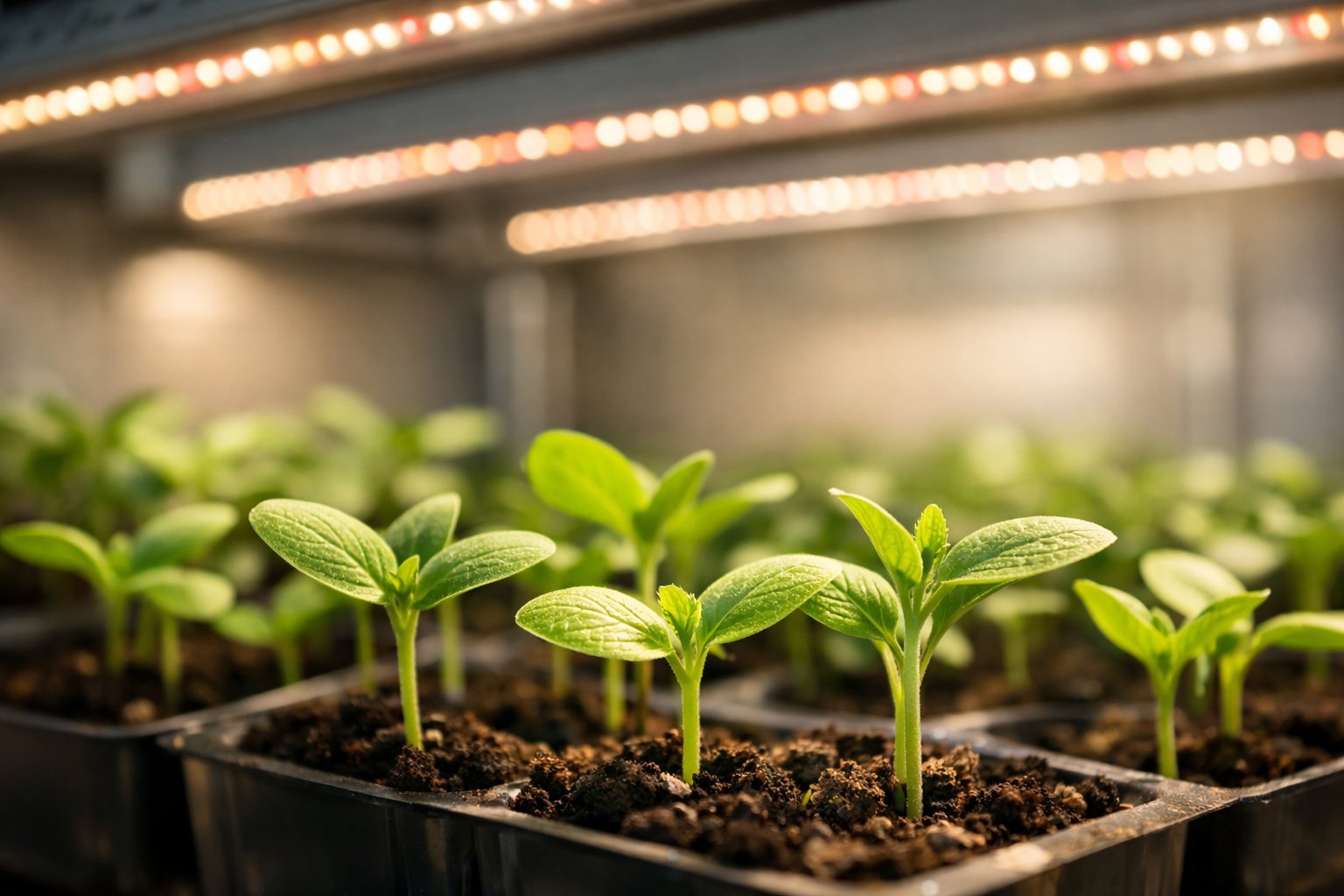
Light drives photosynthesis and controls how seedlings develop, making it essential to understand intensity, duration, and spectrum. These three factors work together to determine whether seedlings grow strong or become weak and stretched.
Understanding Light Intensity and PAR
Light intensity measures how much light energy reaches seedlings. PAR (Photosynthetic Active Radiation) refers to the wavelengths plants use for photosynthesis, ranging from 400 to 700 nanometers.
PPFD (Photosynthetic Photon Flux Density) measures PAR in micromoles per square meter per second (μmol/m²/s). This metric tells growers exactly how much usable light hits their seedlings. Most seedlings need 100-300 μmol/m²/s during early growth stages.
Lux measures light visible to human eyes, not plants. A reading of 2,000-3,000 lux might seem bright to people, but seedlings need much more. LED grow lights rated at 100-200 watts typically provide adequate PPFD for small growing areas.
DLI (Daily Light Integral) calculates the total amount of PAR a plant receives over 24 hours. Seedlings typically require a DLI of 6-12 mol/m²/day. Higher light intensity for shorter periods can equal lower intensity for longer durations.
Distance affects intensity dramatically. Moving a grow light from 12 inches to 24 inches above seedlings can reduce PPFD by 75%.
Photoperiod and Light Duration Explained
Photoperiod describes the daily cycle of light and dark periods. Seedlings need both light for growth and darkness for rest and development.
Most seedlings thrive with 14-16 hours of light per day. This duration provides enough energy for photosynthesis while allowing time for dark-period processes. Some growers use 18 hours, but this can stress certain seedling types.
Dark periods trigger important hormonal processes. Plants produce growth regulators during darkness that control stem elongation and root development. Without adequate dark time, seedlings may show abnormal growth patterns.
Light duration affects temperature and humidity in growing spaces. Longer photoperiods generate more heat, requiring better ventilation. Shorter periods may need supplemental heating in cold environments.
Using timers ensures consistent photoperiods. Irregular light schedules confuse seedlings and slow growth. Set timers to match natural daylight patterns when possible.
The Role of Light Spectrum in Seedling Growth
Light spectrum refers to the different wavelengths or colors of light. Each wavelength affects seedling development differently.
Blue light (400-500nm) promotes compact growth and strong stems. It prevents seedlings from becoming leggy and encourages thick leaves. Blue wavelengths keep internodal spacing tight.
Red light (600-700nm) drives photosynthesis and encourages faster growth. It influences flowering and fruiting later in plant life. Too much red without blue creates tall, weak seedlings.
Most seedlings need a balanced spectrum with both blue and red wavelengths. A ratio of 2:1 or 3:1 blue to red works well during early stages. Full-spectrum grow lights simulate natural sunlight and include green, yellow, and orange wavelengths.
LED grow lights allow spectrum customization. Many models let growers adjust blue and red ratios as seedlings mature. Fluorescent lights provide a decent spectrum but lack intensity for vigorous growth.
Green light (500-600nm) penetrates deeper into plant canopies than other wavelengths. While not essential for seedlings, it supports photosynthesis in lower leaves.
Recommended Grow Light Schedules for Each Seedling Stage
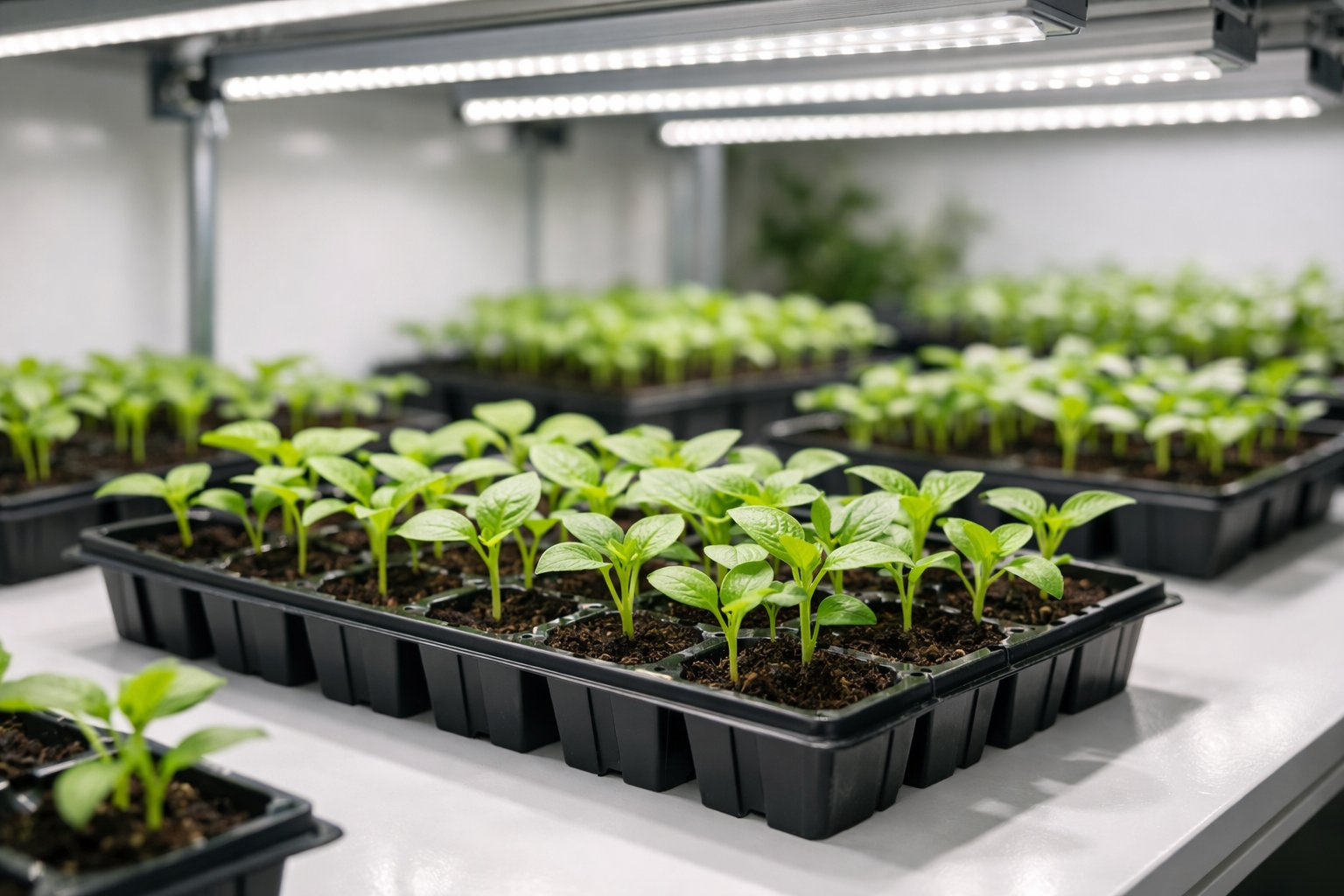
Seedlings require different amounts of light as they progress from germination through vegetative growth and into transplanting. The right light schedule supports healthy development without overwhelming young plants.
Germination and Early Seedling Light Needs
Seeds don't need light during germination. They rely on stored energy to sprout. Once the seedling emerges from the soil, light becomes essential for photosynthesis and growth.
Early seedlings need 16 to 18 hours of light per day. This schedule gives young plants enough energy to develop strong stems and roots without burning them. The remaining 6 to 8 hours of darkness allows the seedling to rest and process nutrients.
Light intensity matters just as much as duration. New seedlings are sensitive to strong light. They need gentle, indirect light positioned 2 to 4 inches above the growing tip. LED or T5 fluorescent lights work well because they produce less heat than other options. A blue-heavy spectrum between 400 and 500 nm encourages compact growth and prevents stretching.
Vegetative Growth Phase Timing
Once seedlings develop their first set of true leaves (typically 1 to 2 weeks after sprouting), they enter the vegetative growth phase. This stage focuses on building leaves, stems, and roots.
The standard light schedule for vegetative growth is 18 hours of light and 6 hours of darkness (18/6). This balance provides enough light for robust growth while giving plants time to rest. Some growers use 20/4 or even 24/0 schedules, but 18/6 offers better energy efficiency and healthier plant development.
Maintaining consistency is critical. Plants respond to regular light cycles by developing strong circadian rhythms. Any interruption or change in the schedule can stress seedlings and slow their growth. Growers should set timers to keep the light schedule automatic and reliable.
Pre-Transplant and Hardening Off Adjustments
Seedlings grown indoors need gradual exposure to outdoor conditions before transplanting. This process, called hardening off, prevents shock and helps plants adapt to natural sunlight and temperature changes.
Start hardening off 7 to 10 days before the planned transplant date. Place seedlings outdoors in a shaded area for 1 to 2 hours on the first day. Increase outdoor exposure by 1 to 2 hours each day. By day 7, seedlings should handle full sun for most of the day.
During hardening off, indoor light schedules can be reduced slightly to mimic natural conditions. Dropping from 18 hours to 14 to 16 hours helps seedlings adjust. This pre-transplant adjustment makes the transition smoother and reduces transplant shock.
Choosing the Best Grow Lights for Seedlings
Different types of grow lights offer unique benefits for seedlings, with LED and fluorescent options being the most popular choices. The light spectrum and bulb type directly affect how well seedlings grow and how much energy growers use.
LED Grow Lights vs. Fluorescent Lights
LED grow lights use less electricity than fluorescent grow lights and last much longer. Most LED models run for 50,000 hours before needing replacement, while fluorescent bulbs typically last 10,000 to 20,000 hours.
Fluorescent lights cost less upfront, making them a good choice for beginners who want to test seed starting without a large investment. They produce less heat than older artificial grow lights, which means seedlings can sit closer to the bulbs without burning.
LED grow lights run cooler than fluorescent options and can be placed 6 to 12 inches above seedlings. They also allow growers to adjust light intensity on many models. The higher initial cost of LEDs pays off through lower electricity bills over time. A typical LED setup uses 40 to 60 percent less energy than comparable fluorescent systems.
Full-Spectrum and Color Spectrum Choices
Full-spectrum grow lights provide wavelengths from 380 to 800 nanometers, which covers the entire range seedlings need for healthy growth. These lights mimic natural sunlight and support strong stem development and leaf formation.
Seedlings need blue light (400-500 nm) during early growth to stay compact and build thick stems. Red light (600-700 nm) helps with root development. Cool-white bulbs in the 5000K to 6500K range work well for seedlings because they provide plenty of blue spectrum light.
Some growers use specialized grow light spectrums, but full-spectrum options work best for seedlings since they cover all growth stages. Standard cool-white fluorescent bulbs provide adequate spectrum coverage for most seedlings at a lower cost than specialized plant bulbs.
Comparing T5, T8, and CFL Options
T5 fluorescent grow lights measure 5/8 inch in diameter and produce more light per watt than T8 bulbs. They work well in tight spaces and provide strong, focused light that keeps seedlings compact. T5 fixtures typically hold 2 to 4 bulbs.
T8 bulbs measure 1 inch across and cost less than T5 options. They produce adequate light for seedlings but need to hang closer to plants, usually 2 to 3 inches above the leaves. Many growers use standard shop light fixtures with T8 bulbs as an affordable solution.
CFL (compact fluorescent) bulbs fit into regular light sockets and work for small seed starting setups. They screw into desk lamps or clamp lights, making them the easiest option to set up. However, CFL bulbs cover less area than tube-style fluorescents and work best for only one or two trays of seedlings.
Grow Light Setup and Positioning Tips
Proper light placement determines whether seedlings develop strong stems or stretch into weak, leggy plants. The distance between lights and seedlings affects both growth rate and plant health, while using the right equipment makes adjustments easier throughout the growing period.
Setting Up Grow Lights for Uniform Coverage
When setting up grow lights, growers need to ensure even light distribution across all seedlings. Uneven coverage leads to some plants growing faster than others, creating inconsistent results.
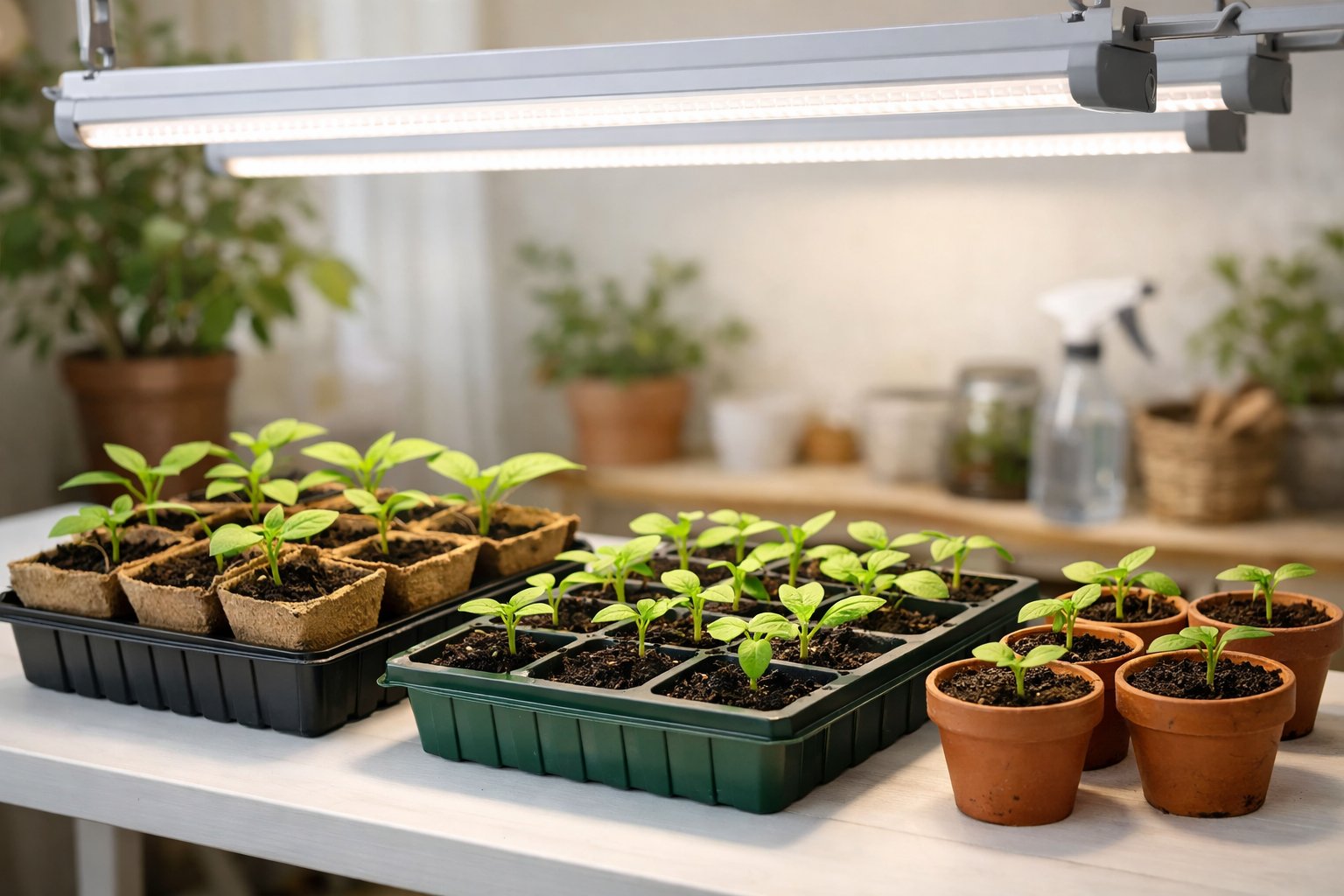
For small growing areas of 2-4 feet, LED strips or T5 fluorescent fixtures work well. Position these lights to cover the entire growing surface without gaps. Larger setups require multiple fixtures spaced evenly to prevent dark spots.
Key Setup Guidelines:
- Place fixtures parallel to the growing surface for even distribution
- Use multiple smaller lights rather than one powerful fixture for better coverage
- Avoid positioning lights directly above individual seedlings
- Check for shadows by observing the growing area during operation
The width of the light fixture should match or exceed the width of the growing area. A 2-foot fixture works for a 2-foot wide shelf, while a 4-foot growing space needs a 4-foot fixture. Growers can use reflective materials on surrounding surfaces to maximize light efficiency and reduce waste.
Adjusting Light Distance and Preventing Burn
Light distance changes as seedlings grow. Newly emerged seedlings need lights positioned 18-24 inches away to prevent burning delicate leaves. After 2-3 weeks, growers can lower lights to 12-18 inches as plants strengthen.
Signs of lights being too close include yellowing leaves, brown scorched tips, and bleached-looking foliage. If these symptoms appear, raise the lights by 2-3 inches immediately. Plants receiving insufficient light develop thin stems and pale green leaves, indicating the need to lower fixtures.
LED grow lights produce less heat than other types, allowing closer placement without burning risk. High-pressure sodium or metal halide lights generate more heat and require greater distance. For most LED setups, maintaining 12-18 inches works well during active growth.
Check seedlings daily during the first two weeks. Adjust height based on plant response rather than following rigid schedules. Different plant varieties have varying light needs, so growers should monitor each batch carefully.
Using Seedling Trays and Rope Ratchets
Seedling trays provide a stable base for organizing plants under grow lights. Standard 1020 trays (10 x 20 inches) fit most growing setups and make it easy to rotate plants for even light exposure. Using trays with drainage holes prevents water accumulation that can lead to damping off.
Rope ratchets simplify height adjustments throughout the growing period. These pulley systems attach to light fixtures and allow growers to raise or lower lights in seconds without tools. Most rope ratchets support 150 pounds, more than enough for typical grow light setups.
Benefits of Rope Ratchets:
- Quick height adjustments as seedlings grow
- Easy to install on shelving units or ceiling hooks
- Locks securely at any height
- Allows precise positioning for optimal light distance
To use rope ratchets effectively, attach them to a stable overhead support before hanging the light fixture. Test the locking mechanism before placing lights over seedlings. Adjust lights weekly during rapid growth phases and daily when seedlings first emerge. This equipment investment saves time and protects plants from improper light exposure.
Automation and Monitoring for Successful Seedling Growth
Setting up automatic timers removes guesswork from lighting schedules, while regular monitoring helps catch problems before they damage seedlings. Recognizing early warning signs of light-related stress allows growers to make quick adjustments that keep seedlings healthy.
Using Automatic Timers for Light Cycles
An automatic timer plugs between the grow light and power outlet to control exactly when lights turn on and off each day. This eliminates the need to manually switch lights and ensures seedlings receive consistent light exposure. Most basic timers cost between $10-20 and can be programmed for daily cycles.
Digital timers offer more flexibility than mechanical ones. They allow growers to set different schedules for weekdays and weekends if needed. Some advanced models connect to smartphone apps for remote control and scheduling changes.
For seedlings, timers should be set to provide 16-18 hours of light daily. A common schedule runs lights from 6 AM to 10 PM or 11 PM. The specific times matter less than maintaining the same cycle every day.
Growers should verify the timer works correctly during the first few days. Check that lights turn on and off at the programmed times. Some timers have backup batteries to maintain settings during power outages, which prevents schedule disruptions.
Monitoring for Signs of Too Much or Too Little Light
Seedlings show clear physical symptoms when light levels are wrong. Signs of too little light include pale or yellowing leaves, weak stems that bend easily, and excessive stretching between leaf nodes. Seedlings reach upward trying to find more light, creating thin, fragile plants.
Signs of too much light appear differently. Leaves may develop brown or white patches where tissue has been burned. The edges of leaves can curl upward or downward as the plant tries to protect itself. Some seedlings show bleached or washed-out coloring in the center of leaves.
Growers should inspect seedlings daily during the first two weeks. Look at leaf color, stem thickness, and the spacing between sets of leaves. Healthy seedlings have dark green leaves, sturdy stems about as thick as a toothpick, and compact growth.
The distance between the grow light and seedlings affects light intensity more than duration. If symptoms of too much light appear, raise the light 2-4 inches higher. For signs of too little light, lower the light closer or increase daily hours from 16 to 18.
Troubleshooting Leggy or Burned Seedlings
Leggy growth happens when seedlings stretch too much, creating tall, weak stems with large gaps between leaves. This occurs when lights are too far away, not bright enough, or run for insufficient hours. To fix leggy seedlings, move lights 2-3 inches closer to the plants and verify the timer provides at least 16 hours of light daily.
Severely leggy seedlings can be saved by replanting them deeper in soil once they have their first true leaves. Bury the stem up to the lowest set of leaves, which allows the plant to develop additional roots along the buried stem section.
Light burn shows as dried, crispy patches on leaves closest to the light source. White or brown spots indicate tissue damage from too much intensity or heat. LED lights typically need to stay 6-12 inches from seedlings, while fluorescent lights can be placed 3-6 inches away.
If light burn occurs, immediately raise the light fixture. Remove badly damaged leaves since they cannot recover. The new growth should appear normal if the light distance has been corrected. Some growers use their hand to test light intensity by holding it at seedling height for 30 seconds - if it feels uncomfortably hot, the light is too close.
Maintaining Healthy Seedlings Until Transplant
As seedlings mature and approach transplant time, they need specific care to ensure they transition successfully from indoor growing to outdoor conditions. Proper lighting adjustments and gradual environmental changes help prevent transplant shock and produce strong, resilient plants.
Adjusting the Schedule for Hardening Off
Hardening off requires gradually reducing light exposure to help seedlings adapt to outdoor conditions. Start this process 7-10 days before the planned transplant date.
Begin by reducing grow light hours from the standard 14-16 hours down to 12-13 hours per day during the first 2-3 days. This mimics the natural light patterns seedlings will experience outdoors. Lower the light intensity as well if using adjustable LED grow lights.
After the initial reduction, continue decreasing light exposure by 1-2 hours every other day. By the final days before transplant, seedlings should receive about 8-10 hours of artificial light. This gradual change prevents stress and allows plants to adjust their growth patterns.
Monitor seedlings closely during this transition period. If leaves appear wilted or discolored, slow down the hardening off process. The goal is to create tougher, more weather-resistant plants without causing damage.
Ensuring Strong, Healthy Transplants
Strong transplants have thick stems, dark green leaves, and well-developed root systems. These characteristics come from proper seedling care during the final weeks of indoor seed starting.
Maintain consistent light schedules during the vegetative growth stage until hardening off begins. Seedlings need steady conditions to build strength before facing outdoor variables. Keep grow lights at the proper distance—typically 6-12 inches for LEDs—to prevent stretching or burning.
Check root development by gently lifting seedlings from their containers. Healthy roots should be white or light tan and fill the growing container without becoming root-bound. If roots circle the pot excessively, transplant sooner.
Watch for signs that indicate readiness for transplant. Seedlings should have at least two sets of true leaves, stems thick enough to support themselves, and leaves that feel firm rather than thin or papery.
Supplemental Lighting During Transition
Supplemental lighting helps bridge the gap between full indoor growing and outdoor conditions. This approach works especially well in early spring when natural daylight hours remain limited.
Place seedlings near a bright window and add grow lights for 4-6 hours during morning or evening. This combination introduces natural light variations while maintaining adequate total light exposure. Position lights to complement rather than compete with window light.
LED grow lights work best for supplemental lighting because they produce minimal heat and use less energy for shorter run times. Set timers to turn lights on during low-light periods, typically early morning before sunrise or evening after sunset.
Gradually decrease supplemental lighting as outdoor conditions improve and hardening off progresses. By transplant day, seedlings should rely entirely on natural sunlight. This measured approach creates adaptable plants ready for their permanent outdoor location.
Frequently Asked Questions
Most seedlings thrive with 14 to 16 hours of daily light exposure, though some growers extend this to 18 hours. Darkness periods remain essential for proper plant development and metabolic processes.
How many hours per day should grow lights be on for indoor seedlings?
Seedlings need 14 to 16 hours of light each day for optimal growth. This extended photoperiod supports their rapid development stage and helps prevent weak, stretched stems.
Some growers provide up to 18 hours of light daily. However, the schedule must always include a dark period of at least 6 hours for essential plant functions.
A programmable timer makes it easy to maintain a consistent lighting schedule. Consistency helps seedlings develop strong, healthy growth patterns from the start.
Is it beneficial to leave grow lights on continuously for seedlings, or should there be periods of darkness?
Continuous light is not recommended for seedlings. Plants require darkness to complete essential metabolic processes that occur separately from photosynthesis.
During dark periods, seedlings process the energy captured during light exposure. They also clear out oxidizing compounds that build up during photosynthesis and repair cellular damage.
A dark period of 6 to 10 hours each day supports healthy development. Without this rest period, seedlings may experience stress and reduced overall vigor.
What is the recommended light schedule for autoflower seedlings under grow lights?
Autoflower seedlings perform well with 18 to 20 hours of light per day. Some growers use a 24-hour light schedule, though this approach remains controversial.
The 18/6 schedule (18 hours on, 6 hours off) provides strong growth while allowing for necessary dark-period functions. This balance supports both vegetative development and plant health.
A 20/4 schedule offers a middle ground for growers seeking maximum growth. The brief dark period still allows some metabolic rest while maximizing light exposure.
At what stage should I start using grow lights for my seedlings?
Grow lights should be turned on immediately after seedlings emerge from the soil. Once the first leaves appear above the surface, the plant begins photosynthesis and requires adequate light.
Waiting even a day or two can cause seedlings to stretch and develop weak stems. Early light exposure from the moment of emergence prevents etiolation and promotes compact, sturdy growth.
The lights should be positioned at the proper distance before seeds germinate. This preparation ensures seedlings receive appropriate light intensity as soon as they break through the soil surface.
Are there any risks to providing too much LED light to seedlings?
Excessive LED light can damage seedlings through light burn. Symptoms include yellowed or bleached leaves, dry edges, and stunted growth.
LED fixtures placed too close to seedlings deliver intensity levels beyond what young plants can process. The leaves nearest to the light source typically show damage first.
If light burn appears, the fixture should be raised immediately. Most LED grow lights need to stay 12 to 24 inches above seedlings, depending on the specific wattage and model.
What specific light schedule is best for promoting healthy growth in vegetable seedlings?
Vegetable seedlings grow best with 14 to 16 hours of light daily. This schedule applies to common garden vegetables like tomatoes, peppers, lettuce, and cucumbers.
The consistent photoperiod encourages strong stem development and healthy leaf formation. Starting the light cycle at the same time each day helps regulate plant growth patterns.
Leafy greens like lettuce and spinach can handle the lower end of the range at 14 hours. Fruiting vegetables like tomatoes and peppers benefit from the full 16 hours of daily light exposure.