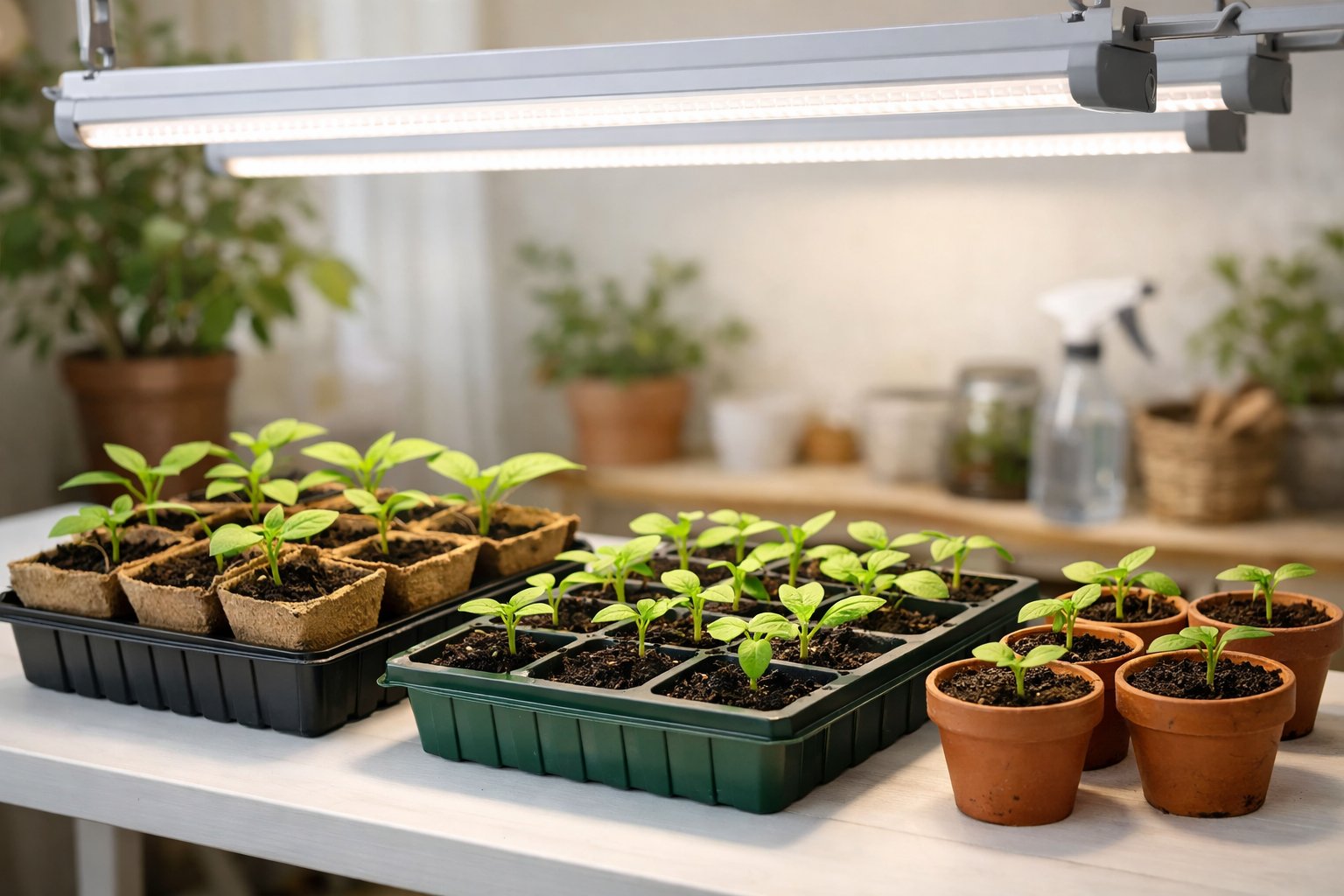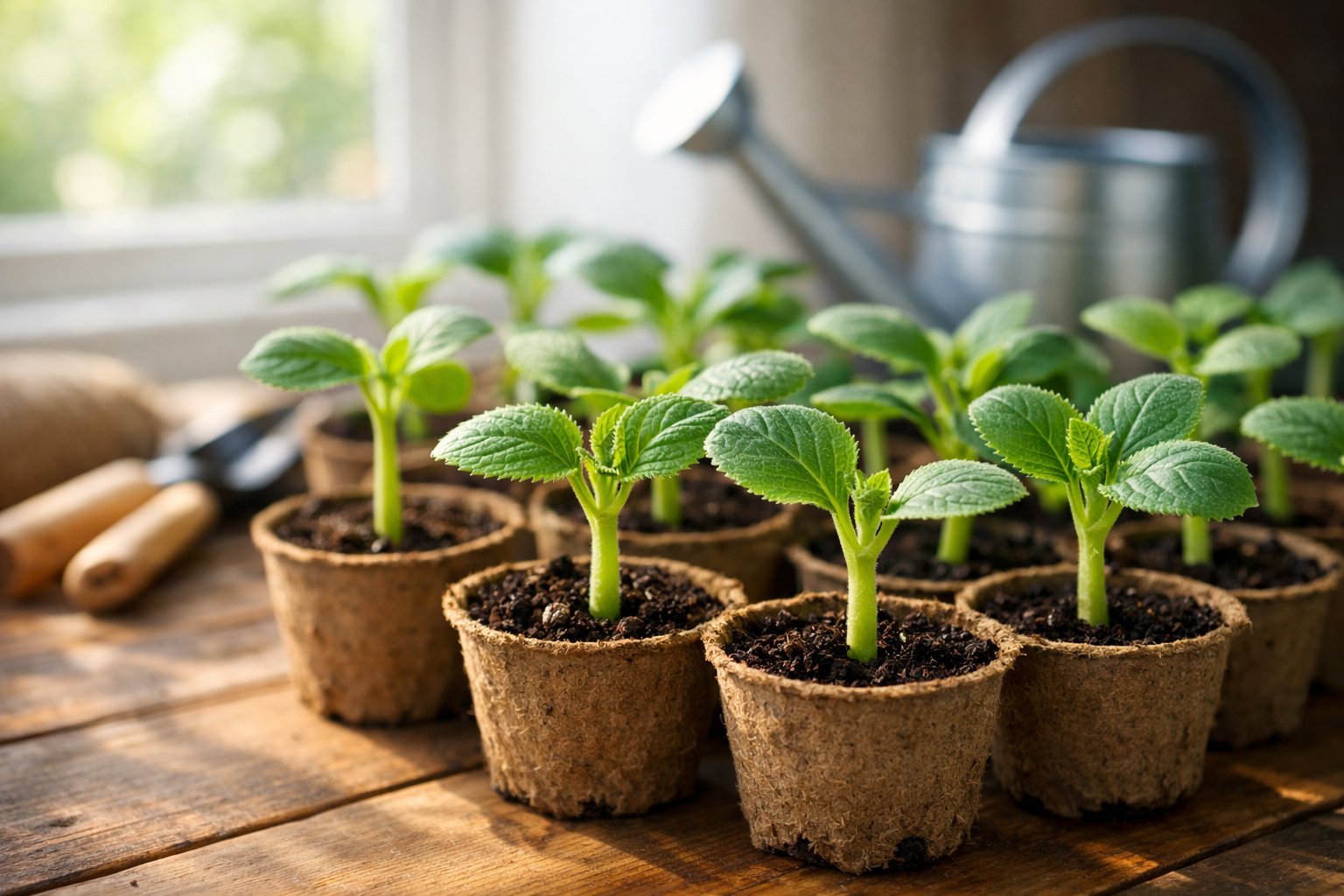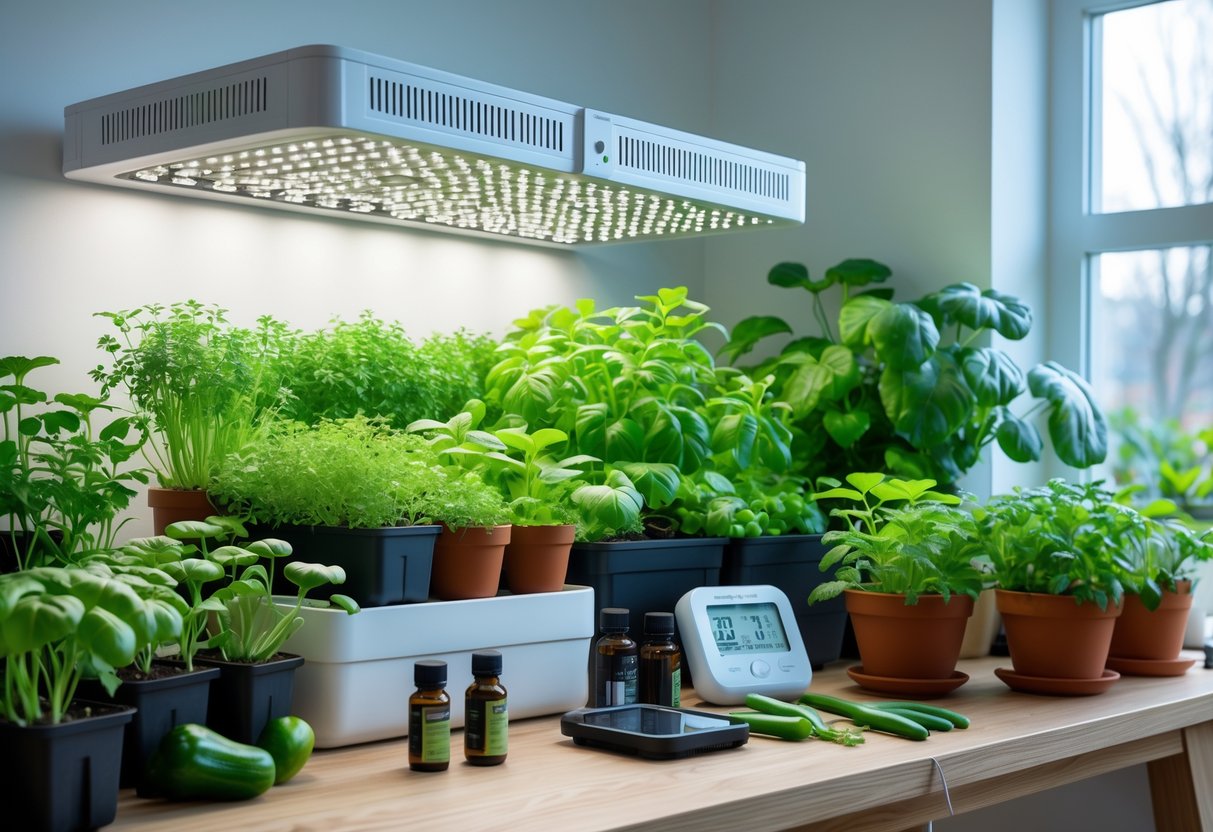
Growing plants indoors seems hard when space is tight. Most people think they need a big room or lots of equipment to start. That's not true. A successful indoor growing setup in a small space needs just three things: the right containers, proper lighting, and plants that match your conditions. Even a windowsill or corner shelf can become a productive garden.
Small apartments and homes work well for indoor growing when the space is planned correctly. The key is choosing compact plants and using vertical areas like walls and shelves. Simple tools like LED grow lights and self-watering containers make care easier. Many beginners worry about failing, but most problems come from overwatering or picking the wrong plants for their light levels.
This guide covers everything needed to set up an indoor garden in limited space. It includes how to plan the area, which plants work best, what containers to use, and how to pick lighting that fits the space. It also explains different growing systems and basic maintenance tasks that keep plants healthy without taking much time.
Key Takeaways
- Plan your space based on available light and choose plants that match those conditions
- Use vertical areas and compact containers to maximize growing space in small rooms
- LED grow lights and self-watering systems make plant care simpler for beginners
Planning Your Indoor Growing Space
Setting up an indoor garden in a small space requires careful evaluation of available room, light sources, and layout options. The right planning ensures plants get what they need while keeping the space functional and organized.
Assessing Light and Location
Natural light availability determines which areas work best for indoor gardening in small spaces. South-facing windows provide the most consistent light throughout the day, making them ideal for most plants. East and west-facing windows offer moderate light suitable for herbs and leafy greens. North-facing windows provide low light that works for shade-tolerant plants.
Growers should observe how sunlight moves through their space over several hours. Direct sunlight reaches the area for at least 4-6 hours for fruiting plants, while 2-4 hours supports herbs and greens. Artificial grow lights become necessary when natural light falls short.
The location needs easy access to water and electrical outlets if using supplemental lighting. Bathrooms and kitchens offer built-in humidity that benefits many plants. Areas near heating vents or air conditioners create temperature swings that stress plants.
Measuring and Mapping Your Space
Accurate measurements prevent buying containers or systems that don't fit. Measure the width, depth, and height of potential growing areas in inches. Window sills typically range from 4-8 inches deep. Countertops and shelves need measurements that account for container height plus plant growth.
Key measurements to record:
- Floor space (length × width)
- Vertical clearance (floor to ceiling or shelf to shelf)
- Window sill dimensions
- Distance from walls for hanging planters
Sketch a simple floor plan marking windows, doors, and furniture. This map helps visualize where vertical gardens, wall-mounted planters, and hanging planters fit without blocking pathways. Small spaces require creative thinking about unused vertical areas.
Choosing Layouts for Small Areas
Vertical gardening maximizes limited floor space by growing upward instead of outward. Wall-mounted planters hold herbs and small plants without taking counter space. Hanging planters suspend from ceilings or hooks to use overhead room. Window boxes attach to sills for growing herbs and greens in natural light.
Multi-tier shelf units create distinct growing zones at different heights. The top shelf receives the most light for sun-loving plants while lower levels suit shade-tolerant varieties. Corner spaces often go unused but accommodate triangular shelving units perfectly.
Upcycled containers like mason jars, tin cans, and plastic bottles reduce costs while adding character. These work well mounted on walls or arranged on compact shelving. Magnetic containers attach directly to refrigerators or metal boards in kitchens.
A small indoor garden setup benefits from grouping plants by light and water needs. This approach simplifies maintenance and prevents over or under-watering.
Selecting the Right Plants for Small Spaces
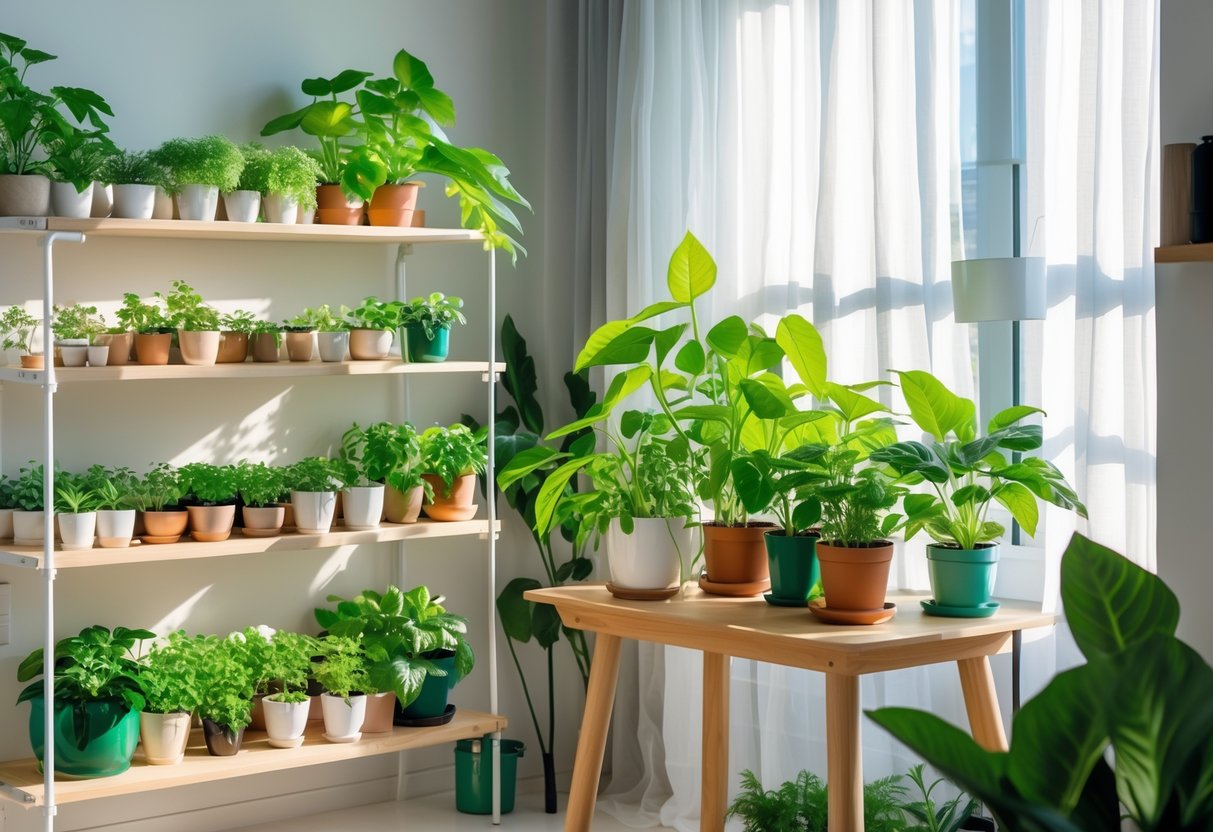
The best plants for small indoor spaces thrive in containers, tolerate indoor conditions, and stay compact in size. Herbs like basil and mint, leafy greens such as lettuce and spinach, and low-maintenance options like succulents and snake plants work well in limited areas.
Best Herbs and Greens for Indoors
Herbs and greens are ideal for small spaces because they grow quickly and don't need much room. Basil thrives on a sunny windowsill and produces fresh leaves for cooking within weeks. Mint grows vigorously in small pots but needs regular trimming to prevent it from taking over. Parsley and cilantro both handle medium light conditions and work well on kitchen counters.
Leafy greens fit perfectly in compact setups. Lettuce grows fast in shallow containers and can be harvested continuously by picking outer leaves. Spinach prefers cooler temperatures and grows well in spots away from heating vents. Kale produces nutrient-dense leaves in small pots and handles lower light better than many vegetables. Thyme stays small and bushy, making it perfect for tight spaces.
Most herbs need 4-6 hours of bright light daily. South-facing windows work best, but grow lights solve lighting problems in darker rooms.
Compact Vegetables and Fruits
Small-space gardeners can grow food beyond herbs with the right plant choices. Cherry tomatoes in hanging baskets save floor space while producing fruit. Dwarf pepper varieties stay under 12 inches tall and produce peppers in small containers. Radishes grow from seed to harvest in just 30 days and need containers only 6 inches deep.
Dwarf citrus trees like Meyer lemons and calamondin oranges stay manageable in 10-12 inch pots. These trees need bright light for 8-10 hours daily and produce fragrant flowers before fruiting. They work best near large windows or under strong grow lights.
Strawberries grow well in hanging planters or vertical towers. They produce runners that can be trimmed or potted separately. Bush beans grow upward with minimal support and produce pods in containers 8 inches deep.
Easy-Care Houseplants and Succulents
Low-maintenance plants suit busy lifestyles and beginner gardeners. Succulents store water in their leaves and only need watering every 2-3 weeks. They come in hundreds of varieties that stay small and fit on shelves or desks.
The snake plant tolerates low light and irregular watering. It grows slowly and purifies indoor air while requiring almost no attention. The ZZ plant handles neglect even better and survives in corners with minimal natural light.
Cacti need bright light but very little water, making them perfect for sunny windowsills in small apartments. Pothos vines trail elegantly from shelves and grow in water or soil. Peace lilies bloom in medium light and signal when they need water by drooping slightly. Spider plants produce baby plants on long stems and adapt to various light conditions.
Containers and Growing Mediums
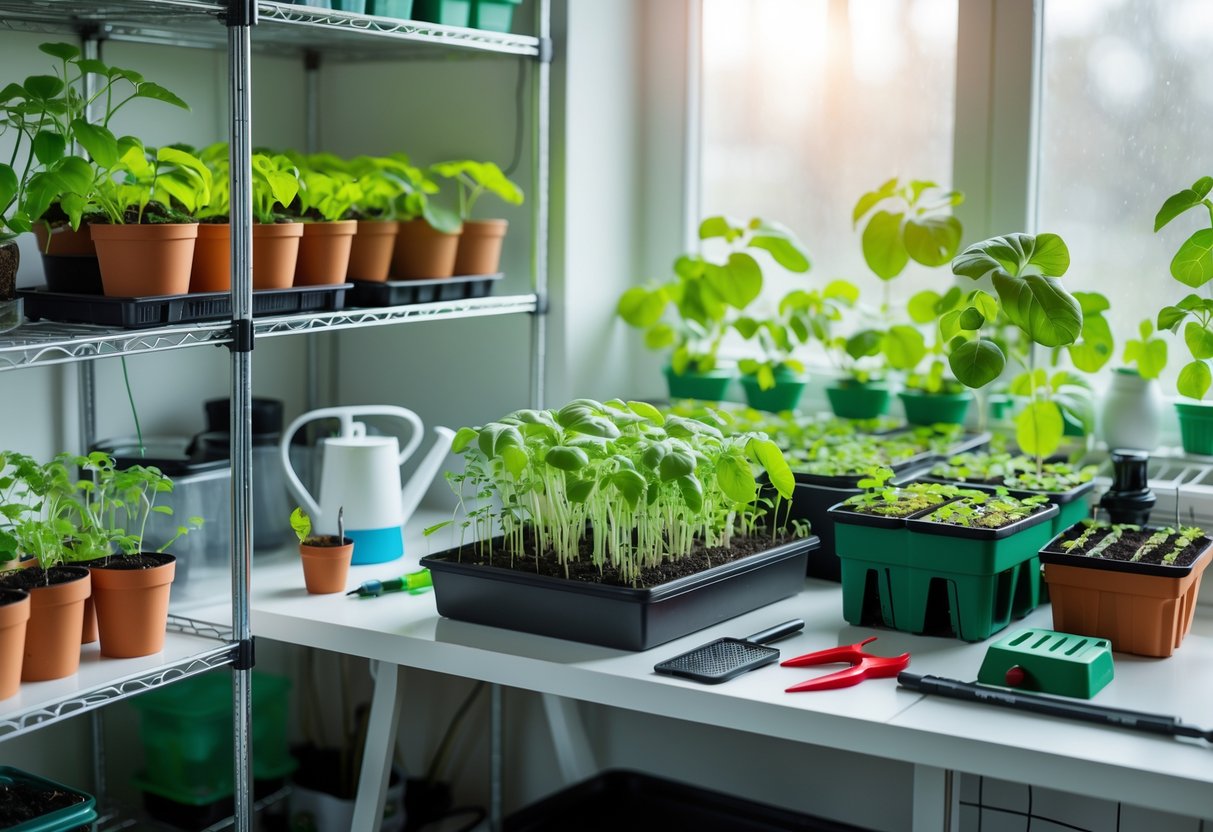
The right combination of containers and growing mediums creates a strong foundation for indoor plants in tight quarters. Smart container choices paired with proper soil mixes prevent common problems like overwatering and poor drainage.
Choosing Planters and Pots
The best containers for small-space indoor growing balance size, material, and drainage needs. Plastic pots hold moisture longer and work well for herbs and leafy greens that need consistent watering. Terracotta planters dry faster due to their porous material, making them ideal for plants that prefer drier conditions.
Container size matters more than most beginners realize. Pots should be only 1-2 inches wider than the plant's current root ball. Oversized containers hold too much wet soil and increase the risk of root rot.
Hanging baskets maximize vertical space while keeping floor areas clear. They work best with trailing plants or compact varieties. Self-watering planters include built-in reservoirs that reduce watering frequency, perfect for busy schedules or frequent travelers.
Clear nursery pots let growers monitor root health and soil moisture levels. These can slip inside decorative containers without drainage holes, combining function with style.
Drainage and Self-Watering Options
Drainage holes are essential for healthy root systems in most indoor plants. Water that sits at the bottom of pots creates oxygen-poor conditions that lead to root rot. Pots with drainage paired with saucers or trays catch excess water while allowing proper airflow.
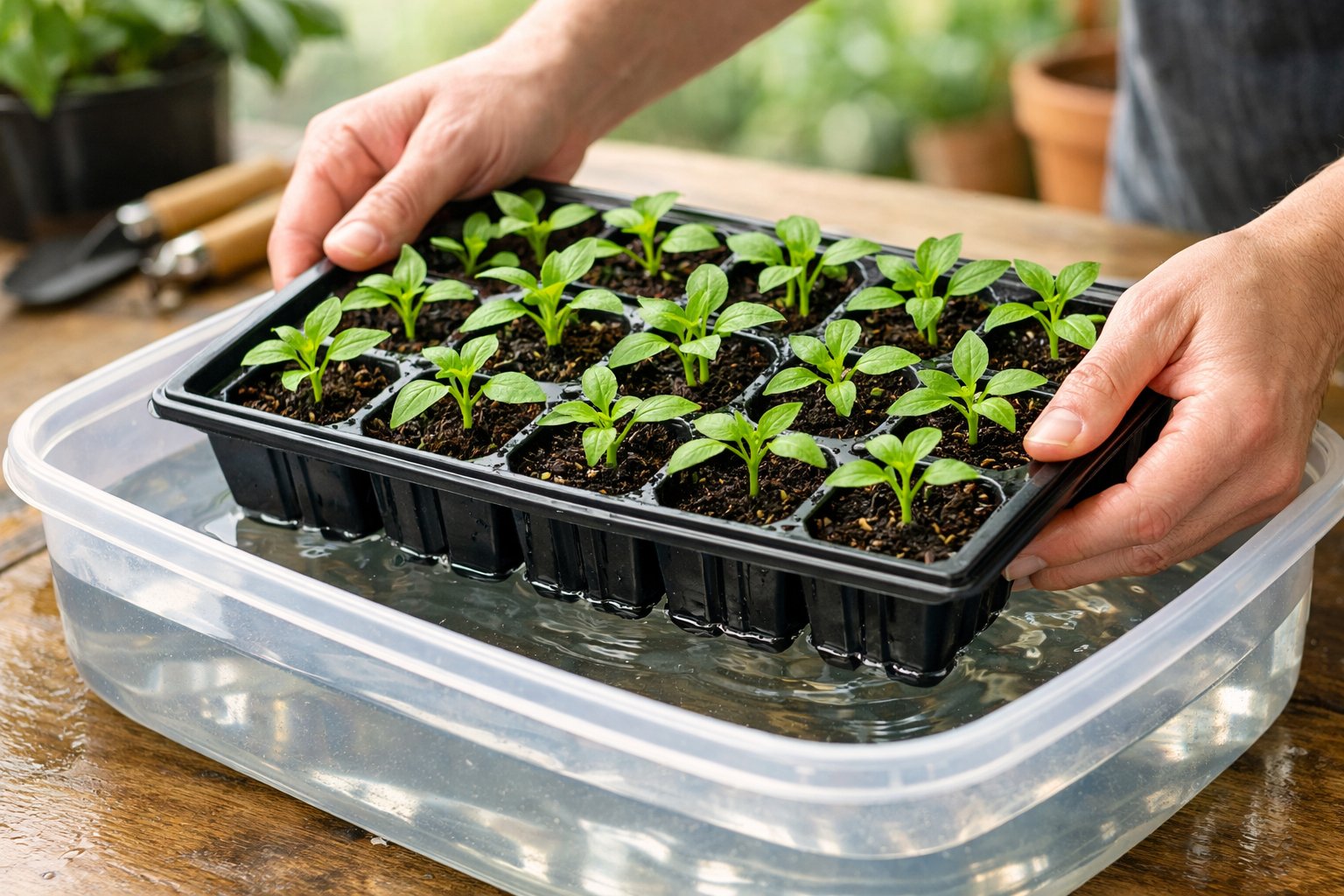
Self-watering containers use a reservoir system that pulls water up through capillary action. These work well for container gardening in small spaces, but they still require the right growing medium. Mixes that are too fine stay waterlogged even in self-watering systems.
Skip adding rocks or gravel at the bottom of pots. This outdated practice actually reduces drainage by creating a perched water table. The entire pot should contain the same growing medium from top to bottom.
Best Potting Mixes for Indoors
Garden soil compacts quickly in containers and holds too much moisture indoors. High-quality potting mix designed for containers provides the right balance of water retention, drainage, and airflow that roots need.
Coco coir serves as an excellent base for indoor growing mediums. It holds moisture evenly without becoming muddy and stays consistent from batch to batch. A simple mix of 2 parts coco coir to 1 part perlite works for most houseplants, herbs, and vegetables.
Clay pebbles (also called LECA) offer a soil-free growing option for advanced growers comfortable with hydroponic methods. Perlite adds crucial air pockets to any potting mix and prevents compaction over time.
| Plant Type | Mix Ratio | Why It Works |
|---|---|---|
| Houseplants & herbs | 2 coco coir : 1 perlite | Balanced moisture and airflow |
| Succulents | 1 coco coir : 2 perlite | Fast drainage prevents rot |
| Seed starting | 1 coco coir : 1 perlite | Light texture for new roots |
Vermiculite increases water retention for plants that dry out quickly, but using too much leads to soggy conditions. Bark chips add structure and work well for plants that need extra aeration around their roots.
Lighting Solutions for Limited Space
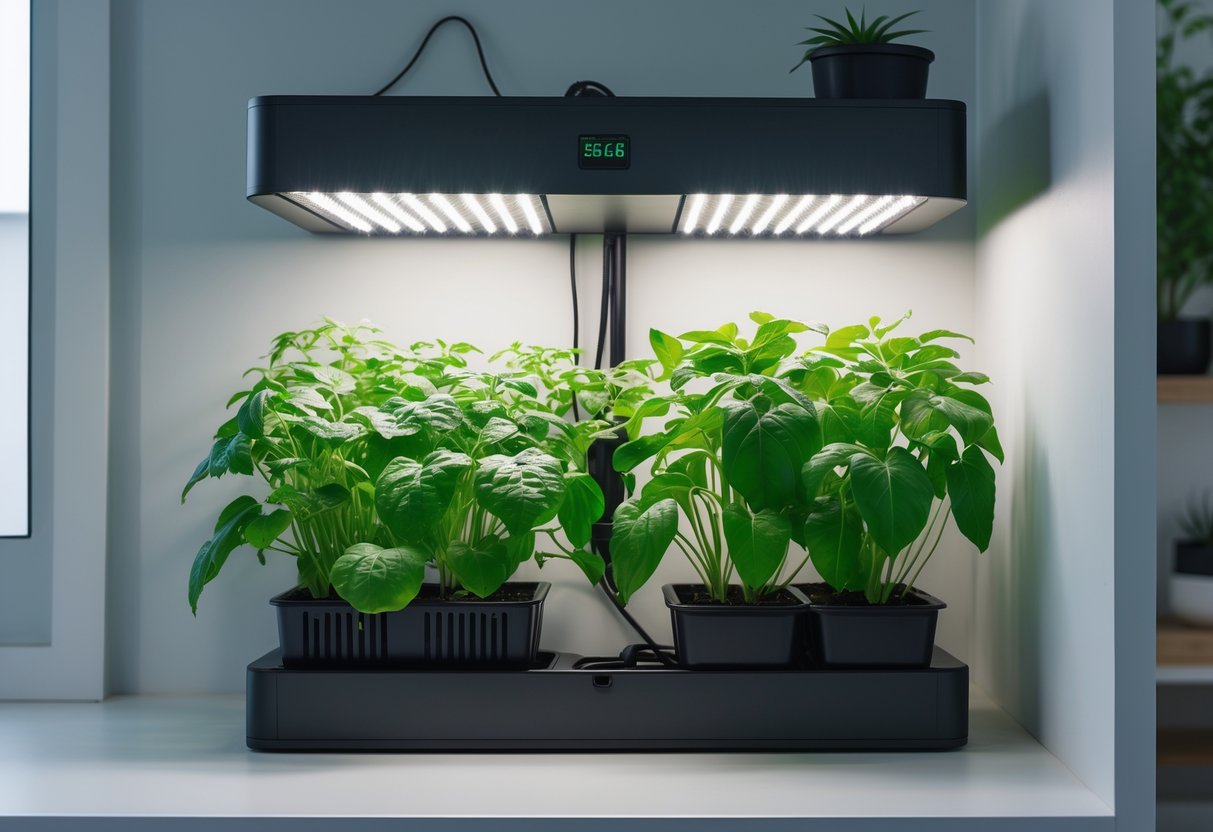
Good lighting makes the difference between struggling plants and thriving ones in small indoor growing setups. Natural light assessment helps determine whether supplemental grow lights are necessary, while proper positioning and timing maximize plant health without wasting energy or space.
Evaluating Natural Light
Windows provide free light, but most apartments lack the intensity plants need. South-facing windows deliver the strongest light at 500-1000 lux on bright days. North-facing windows typically provide only 50-150 lux, which falls short of the 1000-2000 lux most edible plants require.
Growers should observe their space throughout the day to identify the brightest areas. Plants that receive less than 6 hours of direct sunlight will likely need supplemental lighting. Even sunny windowsills often create uneven growth, with plants leaning toward the light source.
A simple test helps determine light adequacy: if reading a book feels difficult without turning on a lamp, plants probably need additional light. Reflective surfaces like white walls or aluminum foil can boost natural light by 20-30% when positioned behind plants.
Selecting Grow Lights
LED grow lights work best for small spaces because they produce minimal heat and use 50-70% less electricity than older fluorescent options. Full-spectrum LEDs at 6500K mimic natural daylight and support all growth stages from seedling to harvest.
Common LED grow light types:
| Type | Coverage | Best For | Price Range |
|---|---|---|---|
| Clip-on | Single pot | Herbs, small plants | $20-$30 |
| Panel | 1-2 sq ft | Multiple pots, trays | $70-$90 |
| Bar/strip | Linear arrangement | Shelves, rails | $40-$50 |
Growers should choose lights rated between 10-30 watts for herbs and leafy greens. Higher wattage (50+ watts) becomes necessary for fruiting plants like tomatoes or peppers. Built-in timers eliminate the need to manually control lighting schedules, while adjustable height features accommodate plant growth.
Positioning and Timing
Most grow lights should sit 6-12 inches above plant tops. Positioning them too close causes leaf burn, while excessive distance produces weak, stretched stems. Adjustable stands or hanging systems allow growers to maintain proper spacing as plants mature.
Plants need 12-16 hours of light daily for optimal growth. A schedule from 6 AM to 10 PM mimics long summer days that promote healthy development. Plants also require 6-8 hours of darkness for rest and metabolic processes.
Rotating pots weekly ensures even light exposure on all sides. Dust accumulation on LED lenses reduces light output by up to 30%, so monthly cleaning maintains efficiency. Combining a reflective surface behind the growing area with proper light placement maximizes coverage without purchasing additional fixtures.
Innovative Indoor Gardening Systems
Modern indoor gardening systems eliminate the need for outdoor space while maximizing efficiency in compact areas. These systems range from soil-free growing methods to enclosed environments that optimize plant growth through controlled conditions.
Hydroponics and Indoor Gardens
Hydroponic systems grow plants without soil by delivering nutrients directly through water solutions. This method uses up to 90% less water than traditional gardening and produces harvests up to 50% faster.
The Kratky method works well for beginners because it requires no electricity or moving parts. A plant sits suspended above a container of nutrient solution and grows as the water level drops. Deep Water Culture (DWC) systems use an air pump to oxygenate water continuously, which prevents root rot and speeds up growth rates.
Popular hydroponic plants for small spaces:
- Lettuce (30-40 days to harvest)
- Basil (40-60 days)
- Spinach (45-60 days)
- Kale (50-60 days)
- Herbs like chives and mint
Nutrient Film Technique (NFT) systems create a thin film of solution that flows over roots continuously. These systems work best for experienced growers who want commercial-level yields in tight spaces. Most systems need pH levels between 5.5 and 6.5 for proper nutrient absorption.
Setting Up a Grow Tent
Grow tents create controlled environments that let growers manage light, temperature, and humidity precisely. These portable enclosures range from 2x2 feet to larger sizes and fit in closets, corners, or spare rooms.
A basic setup includes the tent frame, reflective interior lining, full-spectrum LED lights, and ventilation fans. The reflective walls maximize light efficiency while maintaining darkness during rest periods. Most leafy greens need 14-16 hours of light daily, while fruiting plants like tomatoes require 14-18 hours.
Temperature should stay between 65-75°F for most plants. Intake and exhaust fans maintain airflow and prevent mold growth. Carbon filters reduce odors in shared living spaces.
Grow tents contain mess and keep growing conditions separate from living areas. They also block light pollution during plant rest cycles, which is critical for proper growth patterns.
Vertical and Modular Systems
Vertical systems stack growing areas upward to multiply yields per square foot. Tower gardens and wall-mounted planters can produce several times more food than horizontal setups in the same footprint.
Modular systems let growers start small and expand as needed. Stackable containers or shelving units with grow lights create flexible configurations that adapt to available space. These systems work particularly well in studio apartments or rooms with limited floor space.
AeroGarden units and similar countertop systems offer plug-and-play options with automated lighting timers. They grow 6-9 plants simultaneously and require minimal maintenance. Wall-mounted pocket planters hold herbs or small greens while using only vertical space.
| System Type | Space Used | Plant Capacity | Best For |
|---|---|---|---|
| Tower garden | 2 sq ft floor | 20-30 plants | Leafy greens, herbs |
| Modular shelves | 3x2 ft | 12-18 plants | Mixed varieties |
| Countertop unit | 1 sq ft | 6-9 plants | Beginners, herbs |
These systems typically include self-watering features or integrated reservoirs that reduce daily maintenance time.
Essential Tools and Maintenance Basics
Getting started with indoor growing requires a few key tools and a solid understanding of basic plant care. The right equipment makes watering more accurate, helps monitor soil conditions, and keeps plants healthy through regular trimming and maintenance.
Must-Have Indoor Gardening Tools
Every indoor gardener needs a basic toolkit to care for plants properly. A watering can with a long, narrow spout allows for precise watering at the soil level without splashing leaves or making a mess. Choose a size that holds enough water for all plants but remains easy to handle in tight spaces.
A soil moisture meter takes the guesswork out of watering schedules. This simple device measures how much water sits in the soil, preventing both overwatering and underwatering. Gardeners stick the probe into the soil and read the dial to know when plants need water.
Basic Tool List:
- Watering can (1-2 quart capacity)
- Soil moisture meter
- Pruning shears
- Spray bottle for misting
- Small hand trowel
- Drainage trays
Plant pots need proper drainage holes to prevent root rot. Self-watering containers work well for people with busy schedules. A spray bottle helps increase humidity around plants that need extra moisture in dry indoor air.
Watering and Moisture Management
Proper watering keeps indoor plants healthy and prevents common problems. Most houseplants need water when the top inch of soil feels dry to the touch. A moisture meter provides accurate readings at different soil depths, showing exactly when plants need water.
Different plants have different water needs. Succulents and cacti prefer dry conditions between waterings. Tropical plants like ferns need consistently moist soil. The moisture meter helps track these needs without relying on memory or guesswork.
Water temperature matters for plant health. Room temperature water prevents shock to plant roots. Cold water straight from the tap can stress plants. Fill the watering can and let it sit for an hour before using it.
Overwatering causes more plant deaths than underwatering. Signs of overwatering include yellow leaves, wilting despite wet soil, and a musty smell from the pot. Good drainage and checking soil moisture before each watering prevents these issues.
Pruning and Plant Care
Regular pruning keeps indoor plants healthy and attractive. Pruning shears with sharp blades make clean cuts that heal quickly. Dull blades crush stems and create entry points for disease. Clean the shears with rubbing alcohol between plants to prevent spreading problems.
Remove dead or yellow leaves as soon as they appear. These leaves drain energy from the plant and can harbor pests or diseases. Cut brown leaf tips at an angle to maintain a natural appearance. Trim leggy stems to encourage bushier growth.
Most indoor plants benefit from light pruning every few months. Spring is the best time for major trimming, as plants enter their active growing season. Remove no more than one-third of the plant at once to avoid shocking it.
Pruning shears also help with propagation. Cut healthy stem sections below a node and place them in water or soil to grow new plants. This creates free plants and helps manage the size of existing ones.
Troubleshooting Common Indoor Gardening Problems
Indoor gardeners in small spaces face specific challenges with pests, water management, and plant nutrition. Quick identification and proper treatment of these issues helps maintain healthy plants and ensures a year-round harvest.
Pest Identification and Prevention
Spider mites appear as tiny red or brown dots on leaf undersides and create fine webbing between leaves. They thrive in dry conditions and multiply quickly in indoor environments.
Fungus gnats look like small black flies hovering around soil surfaces. Their larvae feed on organic matter in potting mix and can damage young roots.
Aphids cluster on new growth and leaf undersides as small green, black, or white insects. They leave behind sticky residue and cause leaves to curl or distort.
Prevention starts with inspecting new plants before bringing them indoors. Growers should quarantine new additions for at least two weeks away from other plants.
Neem oil works as an effective organic treatment for all three pests. Mix one tablespoon per quart of water and spray affected plants weekly until pests disappear. Yellow sticky traps catch adult fungus gnats, while allowing soil to dry between waterings eliminates their breeding grounds.
Good air circulation prevents many pest problems. A small fan moving air around plants makes conditions less favorable for spider mites and other common pests.
Solving Water and Soil Issues
Overwatering causes more plant deaths than any other problem in small indoor gardens. Soil that stays constantly wet leads to root rot, which shows up as yellowing leaves that feel soft and mushy.
The finger test helps determine watering needs. Gardeners should stick a finger two inches into soil before watering. Dry soil at this depth means the plant needs water.
Container choice matters significantly. Pots must have drainage holes at the bottom. Excess water sitting in saucers should be emptied within 30 minutes of watering.
Compacted soil prevents proper drainage and root growth. Quality potting mix designed for containers stays loose and drains well. Garden soil becomes too dense for container use and should be avoided.
Underwatering creates crispy brown leaf edges and wilting. Plants recover quickly once watered properly, but repeated stress weakens them over time.
Recognizing Nutrient Deficiencies
Yellowing leaves with green veins indicate iron deficiency. This occurs most often in plants grown in alkaline soil or water.
Nitrogen deficiency shows as pale yellow older leaves while new growth stays green. This happens commonly in fast-growing vegetables and herbs after several weeks in the same container.
Purple or reddish tints on leaves and stems signal phosphorus deficiency. Cold temperatures can trigger this condition even when phosphorus exists in the soil.
Balanced liquid fertilizer applied at half strength every two weeks prevents most nutrient problems. Organic options include fish emulsion and seaweed extracts.
Brown leaf tips and edges often mean fertilizer burn from too much feeding. Growers should flush soil with plain water if this occurs and reduce fertilizer concentration.
Slow growth and small leaves indicate overall nutrient depletion. Plants grown in the same soil for months eventually use up available nutrients and need fresh potting mix or regular feeding schedules.
Frequently Asked Questions
Indoor gardening in small spaces requires specific equipment and strategies to succeed. Grow lights, ventilation, and space-saving designs form the foundation of any compact growing setup.
What are the essential components of an indoor growing setup for small spaces?
Every small-space indoor garden needs four basic components to function properly. These include a light source, growing containers, a growing medium, and proper air circulation.
Grow lights serve as the primary light source since natural sunlight often proves insufficient indoors. LED lights work best for small spaces because they produce less heat and use less electricity than traditional options. Most plants need 12-16 hours of light daily.
Containers should fit the available space while providing adequate room for root growth. Fabric pots, plastic containers with drainage holes, and hanging planters all work well in tight quarters. The growing medium can be traditional potting soil or alternatives like coconut coir or perlite mixtures.
A small fan provides necessary air circulation to prevent mold and strengthen plant stems. Temperature control matters too, with most plants thriving between 65-75°F. A basic thermometer helps monitor conditions.
How can one maximize space when setting up an indoor garden?
Vertical growing transforms limited floor space into productive growing areas. Wall-mounted planters, hanging baskets, and tiered shelving units allow gardeners to grow multiple plants without expanding their footprint.
Stackable containers and multi-level plant stands create layers of growing space. These setups work particularly well for herbs and small vegetables that don't require deep root systems. Corner spaces and walls that receive adequate light become valuable real estate.
Choosing compact plant varieties prevents overcrowding. Dwarf or bush varieties of tomatoes, peppers, and other vegetables grow well in confined spaces. Pruning and training plants to grow in specific directions also helps control their size.
What are the best beginner-friendly indoor garden systems?
Countertop herb gardens provide the simplest entry point for indoor growing. These compact systems include built-in lights and water reservoirs, requiring minimal setup or maintenance. They work well for basil, parsley, and other kitchen herbs.
Self-watering containers reduce the learning curve for new gardeners. These pots feature a reservoir that slowly releases water to the soil, preventing over or under-watering. They're available in various sizes to fit different spaces.
All-in-one grow boxes offer complete growing environments in compact packages. These units include lights, ventilation, and reflective interiors. While more expensive than basic setups, they eliminate guesswork for beginners.
Which vegetables and herbs are most suitable for indoor gardening?
Leafy greens grow quickly and require minimal space, making them ideal for indoor gardens. Lettuce, spinach, arugula, and kale all thrive under grow lights. They can be harvested within 30-45 days of planting.
Herbs adapt well to indoor conditions and provide fresh flavors year-round. Basil, mint, cilantro, parsley, and chives grow successfully in small containers. Most herbs need 6-8 hours of light daily and prefer slightly dry soil between waterings.
Compact vegetables produce food without taking up much room. Cherry tomatoes, hot peppers, radishes, and green onions all grow well indoors. These plants need stronger light than herbs, typically 12-16 hours per day.
Microgreens offer the fastest harvest of any indoor crop. These young seedlings reach harvest size in 7-14 days and pack concentrated nutrition. They require only shallow trays and basic lighting.
Can you explain the process of setting up a small grow room for beginners?
The first step involves selecting an appropriate space with access to electricity. Closets, spare bathrooms, and unused corners all work as grow areas. The space should allow for ventilation and maintain temperatures between 65-75°F.
Next, install reflective material on walls to maximize light efficiency. White paint, mylar sheets, or emergency blankets bounce light back onto plants. This step increases light coverage without adding more fixtures.
Mount grow lights at the proper height above where plants will sit. LED lights typically hang 12-24 inches above plant canopies, depending on their wattage. Adjustable hanging systems allow for height changes as plants grow.
Set up containers with drainage trays to catch excess water. Arrange them to maximize space while allowing air circulation between plants. Add a small oscillating fan to move air gently across the growing area.
Install a simple timer for lights to maintain consistent day and night cycles. Most plants need 12-16 hours of light followed by 8-12 hours of darkness. Consistency in lighting schedules improves plant health and growth rates.
What are the benefits of using a hydroponic system for indoor gardening?
Hydroponic systems use up to 90% less water than soil-based growing. The water recirculates through the system rather than draining away. This efficiency makes hydroponics practical for indoor spaces where water management matters.
Plants grow faster in hydroponic setups because nutrients reach roots directly. Growth rates can increase by 30-50% compared to soil growing. Harvests arrive sooner, allowing for more growing cycles per year.
These systems eliminate soil-related problems like pests, diseases, and weeds. The controlled environment reduces the need for pesticides or herbicides. Cleanliness improves since there's no dirt to track around living spaces.
Space efficiency increases with hydroponic systems since roots need less room to access nutrients. Multiple plants fit into smaller areas. Vertical hydroponic towers maximize production in tight spaces by stacking growing sites.